Saturday, 9:30 in the morning, my kitchen table, three insurance declaration pages fanned out like a bad poker hand, and my husband Dale on the speakerphone with our agent while I take notes on the back of a school fundraiser flyer. Coffee, black. The agent's hold music, faint and tinny. We had a renewal in the mailbox showing the fleet up $212 a year, a budget summit scheduled for that evening, and a standing joke that our driveway held more vehicles than our garage held space.
The stakes sounded slight — $212 — til you remembered our furnace was 19 years old and had started making the sound of a man clearing his throat before a long speech. Three cars: my 2014 Civic with 148,000 miles, Dale's 2019 F-150, and a 2016 Rogue we shared for hauling mulch and children. One of the three numbers on those pages would rearrange the driveway by August, and it was not the one I anticipated. The plan, as of Friday night, had been to sell the Civic, the oldest and consequently the weakest, we assumed. The morning fixed our assumptions. It used a pencil.
three papers and a speakerphone
Marcus, our agent of eleven years, reads numbers the way other people read weather — flat, certain, slightly apologetic. He walked the three declarations one at a time while Dale drove to the hardware store and I took the notes. Civic: $851 a year. F-150: $1,589, full coverage, cuz a lender still held the title on it. Rogue: $1,076, full coverage, no lender, no excuse, just habit. Then Marcus said the sentence that rearranged our driveway: per mile, the truck was costing us about four times what the Civic cost to insure.
the number under the Civic
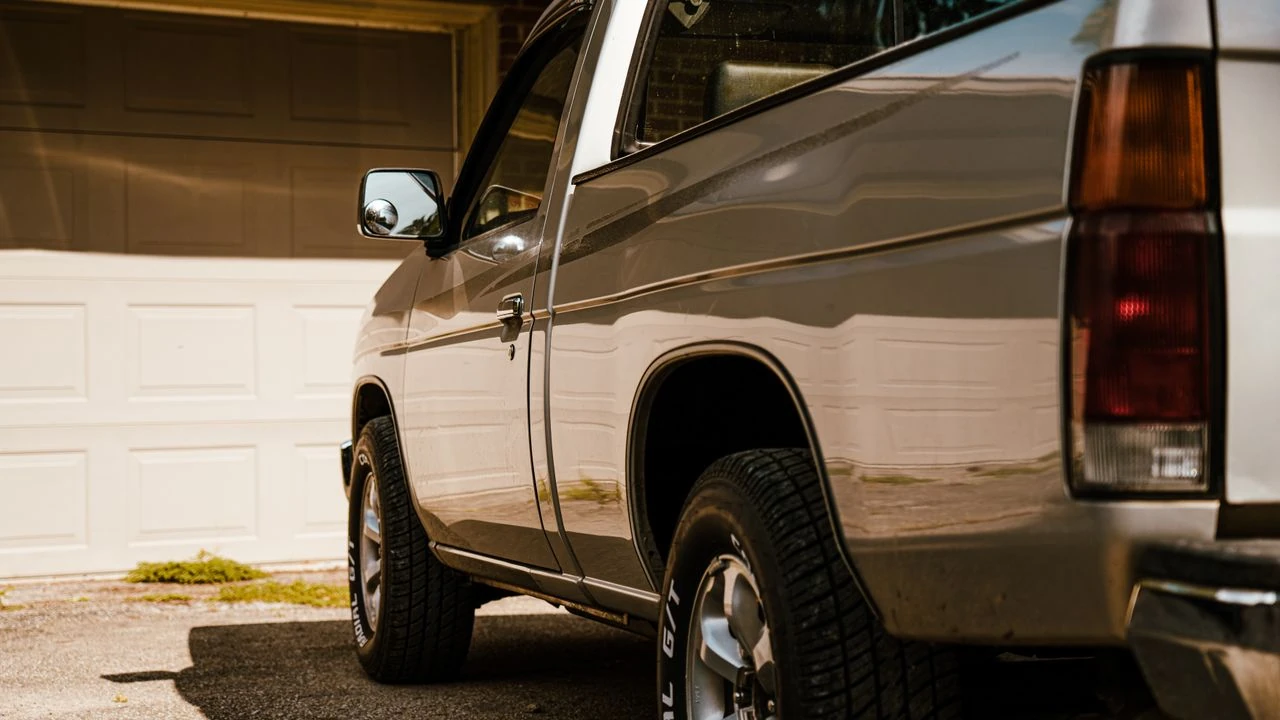
I stared at the $851 like it had misspelled something. The Civic is beige, dented at the left rear from a 2019 parking garage incident we do not discuss, and worth less than some people's bicycles. It is also, per Marcus's table, the cheapest thing we insure by a margin of $738 a year, which is real money wearing the disguise of a boring car. Dale pulled into the driveway right about then, and I met him at the car door holding the flyer like a subpoena. We had planned to sell the wrong car. The plan had been a suspect wearing confidence.
what the F-150 cost to park
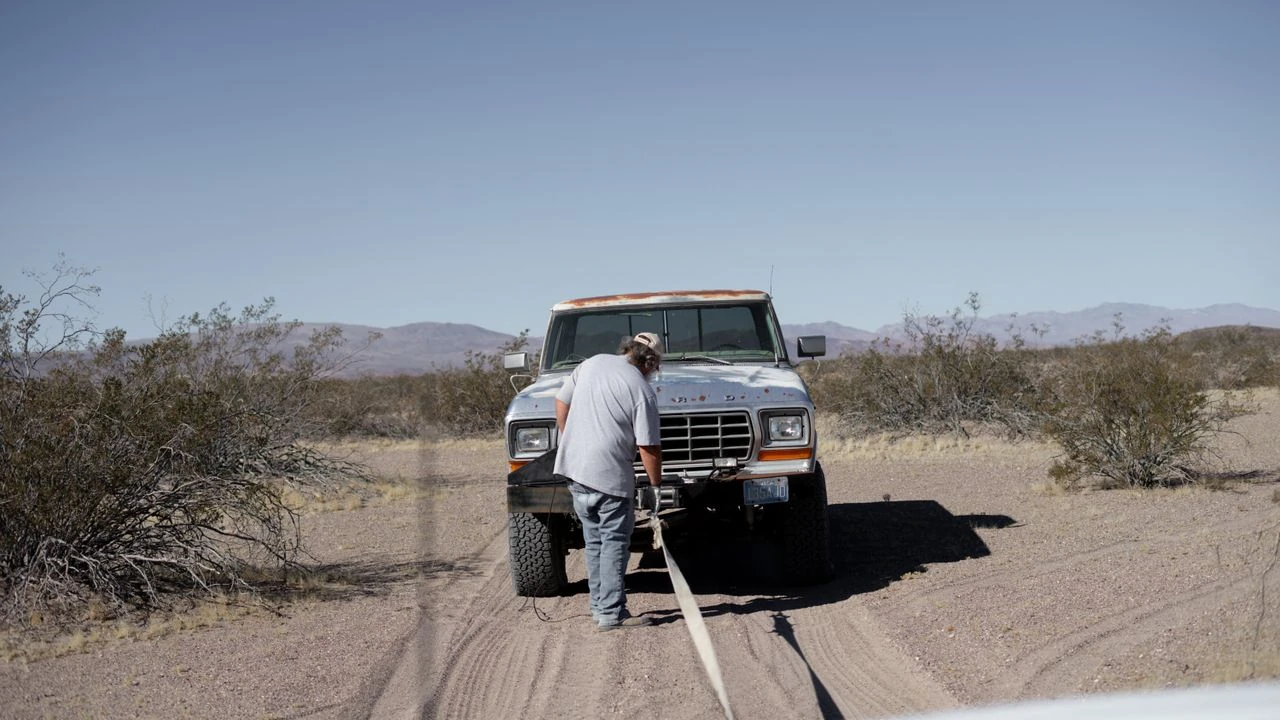
The truck itself is lovely, and I want that on the record. Crew cab, tow package, a bed liner Dale conditions with automotive wax like a man moisturizing a pet. It is also driven 6,100 miles a year, mostly to a job site twice a week and a home improvement store on Saturdays, and it insures at $1,589 while occupying half our garage. Per mile, once Marcus ran the division, the F-150 cost us about 26 cents on insurance alone, against the Civic's 6. A truck is a tool. This one had become a pet with a premium.
the multi-car discount that wasn't
One complication deserved honesty before we cancelled anything: the bundle. Insuring three cars together earned us a multi-car discount worth about 8 percent, and dropping to two would hand part of that back — Marcus quoted the new two-car fleet, with a 2023 CR-V Sport hybrid replacing both sold vehicles, at $1,844 a year all-in, against $3,516 for the three-car status quo. The discount, it turns out, was a coupon. A coupon for buying too much of something. Even after giving back the multi-car break, the two-car quote left $1,672 a year in our checking account, which is furnace money, or an awfully nice vacation, or both if the furnace behaves.
five weeks for a private sale
The dealer offered $17,200 for the F-150 on trade and $8,900 for the Rogue, both numbers calibrated to be accepted in under a minute. We declined both. The Rogue sold privately in 19 days for $10,050, to a nursing student who paid cash and honked at our house the following week like a graduate. The truck took five weeks and ultimately went for $18,900 to a landscaping contractor who inspected the bed liner and nodded like a priest. Five weeks of scheduling test drives around soccer, in exchange for $2,800 more than the dealer's paper. That is about eighty dollars a day, tax-free-ish, for answering messages promptly.
Ray and the 12.9 percent app
My brother-in-law Ray, who has never met a payment plan he did not like, heard we were one vehicle down and arrived with his phone open to an app offering a personal loan at 12.9 percent for the exact right moment to upgrade. The gap between our proceeds and the replacement we wanted was not actually a gap — $18,900 from the truck sat in savings, plus the Rogue's $10,050, plus $2,400 we had already set aside toward the replacement fund. We snagged the CR-V for $31,400 out-the-door, put $18,000 down to keep the loan modest, and financed $13,400 for 48 months at 7.4 percent rather than drain everything. Ray called us conservative. We took it as a compliment and drove to pick up the car.
5.75 by June
The CR-V loan lasted four months before I got bored of the rate. On-time payments, a credit score resting at 788, and a credit union that had been courting our accounts for years produced an auto loan refinance at 5.75 percent in June, dropping the payment from $322 to $311 and about $520 off the remaining interest. Eleven minutes at a branch. One signature. No laminated menus, and no box claiming cash buyers pay more. The truck, wherever it is hauling mulch for a living now, never once gave us a rate worth keeping.
the driveway, rearranged
Last Saturday, 9:30 again, same table, the new renewal arrived and I opened it before the coffee finished: two declaration pages where there had been three, $1,858 combined, and the furnace fund got its first $1,000 the same afternoon. I miss the truck sometimes. Dale mentions it on Sundays, the way you mention a friend who moved away. But the cheap car — the beige Civic we almost sold first, the one the audit crowned — starts every morning without complaint, and every time I walk past it I hear Marcus's flat voice reading numbers like weather. The most expensive assumption we owned was that the oldest car deserved to go first. The pencil said otherwise. The driveway believes the pencil now.