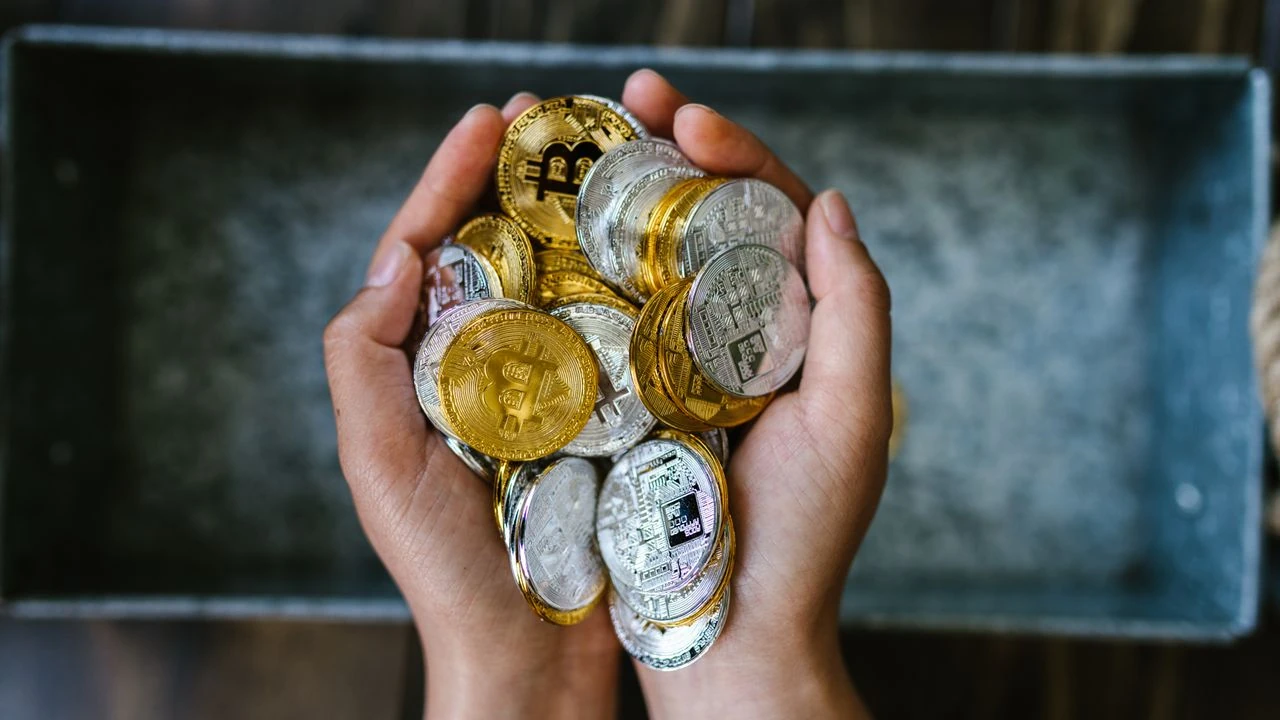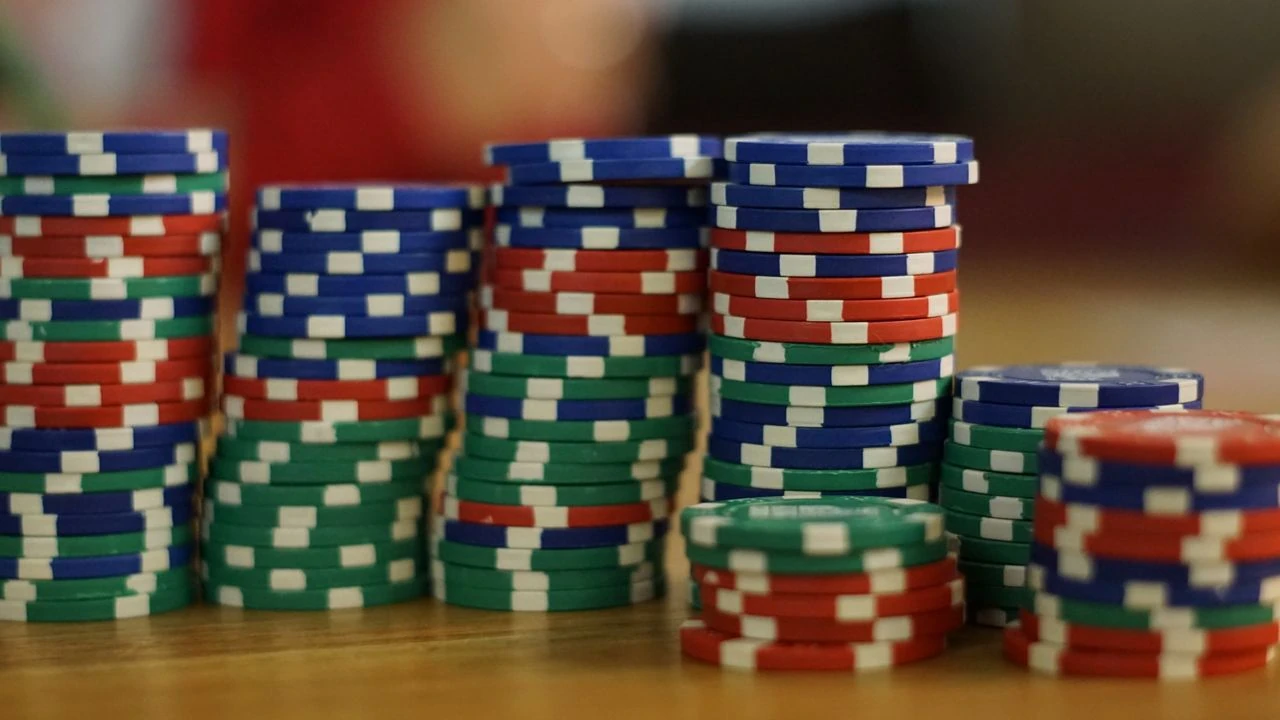
Wednesday, May 20, 8:15 at night. Kitchen table cleared of the mail, a $12 box of poker chips from the basement open between us, my brother Dev across the table with his arms crossed. One hundred chips. One table. He wanted to know whether a coin he almost snagged was "too volatile," which is a price question, and I had decided the honest answer starts somewhere else entirely. I dealt one hundred chips into a stack in front of him and said every chip is a vote on what actually happened.
Dev is thirty-one, careful with money to the point of spreadsheets for groceries, and he had spent that whole week weighing a $4,300 personal loan against a 0 percent card to consolidate some old balances, while fretting that the application's hard pull had already nicked his credit score by nine points. Against that backdrop his crypto curiosity was a $500 question. My job at the table was not to pick his coins. It was to show him which risks are weather and which ones are arson.
The chips made it cruel and clear in about four minutes. Price volatility shakes the room. A majority attack owns the room, the doors, and the rulebook, and on slight chains the door is cheaper than you think. By the end of the night he had ruled out the small-cap token entirely, and it had nothing to do with the chart he came in worried about.
the table is the chain
Setup took one minute. The stack of one hundred chips is all the staking power on our pretend network, and deals get recorded in a notebook we called the ledger, because a blockchain is just a shared notebook everyone can check and nobody can quietly erase. I put 55 chips in my pile and 45 in his. Fifty-five percent. The attack threshold everyone quotes is 51, and my 55 made the point with margin to spare. I was, from that moment, the network's opinion.
spending the same chip twice
Then I paid for his imaginary pizza twice. I handed him one chip for the pizza and logged it in the notebook, then quietly built a private version of the notebook where that chip never left my pile, and when both versions got revealed at the same time, the network had to pick a history. With my 55 chips, my version won every single time. He watched me take his pizza money back while holding a rulebook that said it was fine. He did not laugh. That was the moment it landed.
why nobody does this to bitcoin
Dev's first smart question was why nobody attacks the hefty chains, and the answer is cost plus witnesses. Renting or buying enough of a giant network's stake or hash power runs into billions, and the attack would crater the awfully asset the attacker holds, so the vault you rob is the vault you own. Slight chains invert that math. A network whose entire security budget rents for less than the used car in the driveway is a bank with a cardboard door.
the $18 million rehearsal
This is not a figured experiment, which I told him with the chips still stacked. Back in 2018 a mid-sized chain got hit for real, and attackers quietly double-spent something like $18 million out of exchanges before anyone caught on, no crowbar, no vault, just rented majority and patience. A different chain took the same medicine in 2020. The chips on our table were $12 of plastic. The real ones were other people's deposits, and every one of those networks had a price chart that looked perfectly normal the whole time.
the price chart hides this
Here is what I wanted him to see. Volatility is the risk that your $500 becomes $380 by Friday, which is painful and survivable and, over a lifetime, mostly cured by boring allocation, the index fund approach where no single bet can sink you. A majority attack is a different species. It is the risk that the scoreboard itself gets rewritten, that the $500 was never anywhere, and no amount of diversification saves you from a ledger that absorbed to lie. One risk lives in the market. The other one lives in the referee.
what dev did with the $500
He kept the money out of the small-cap token entirely, which I did not script, I promise. Part went to adding $50 a month to his automated buy of a broad-market ETF, part stayed in cash for the loan consolidation he had already half decided on. The poker chips went back in their box. He took a photo of the double-spend page in the notebook first and said it was going in the family chat as a warning label.
the cleanup at 8:52
By 8:52 the chips were boxed, the notebook was closed, and Dev was at the sink washing the pizza smell off his hands, except there had been no pizza, which is exactly the point. On his way out he said something I wrote down: I was scared of the wrong monster. Price is the loud monster. The quiet one holds the eraser.