Monday, 2:50 in the afternoon, April 20. I dropped my phone into a manila envelope marked JUROR 47, pushed it thru the slot of a steel locker, and sat on a walnut bench in a courthouse hallway listening to a bailiff explain that the trial would run as long as it ran. Six weeks, possibly. No phones in the courtroom, no laptops, no peeking. The last thing on my screen before the envelope sealed was my brokerage app, down 0.4% on the day.
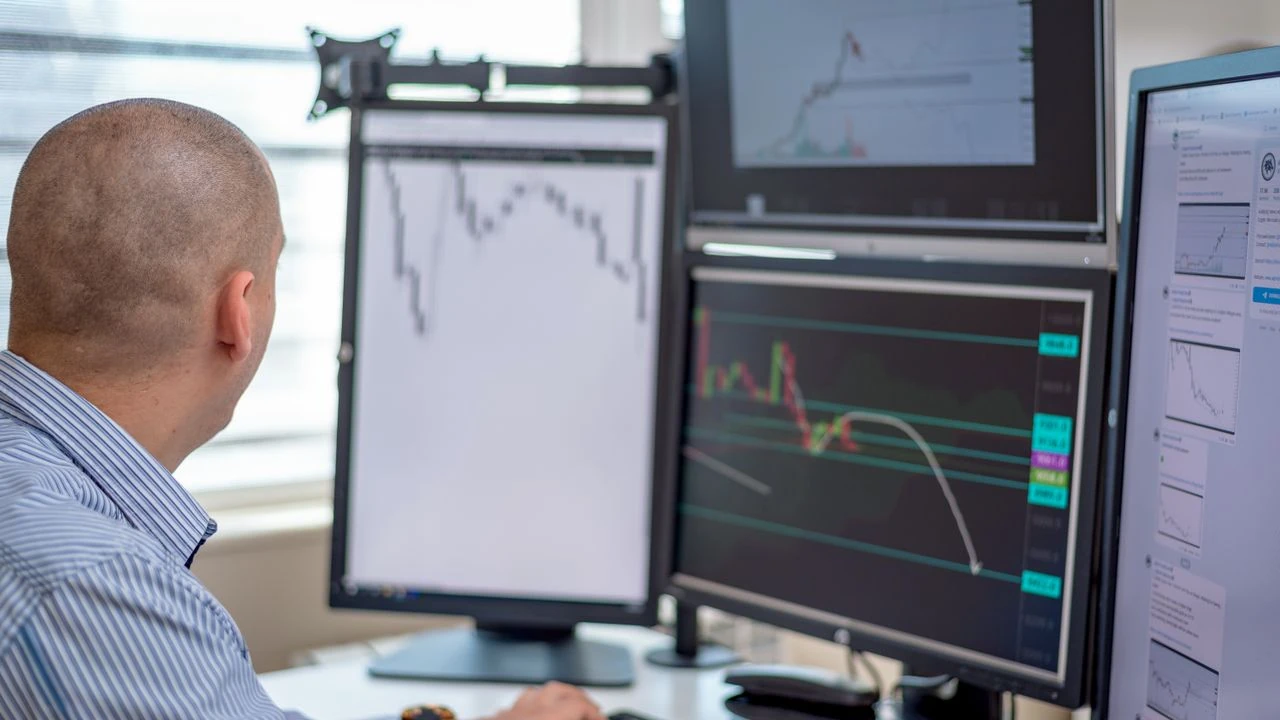
Here is what made that envelope heavy. I have checked the market most trading days for eleven years, some days forty times, a habit I describe as staying informed and my wife describes as blinking. My portfolio sat at $214,080 that morning. A trial was about to decide whether a man went to prison for wire fraud, twelve of us would decide it, and the entire time my money would be out there alone, unwatched by the one person who checks it hourly.
What I did not know on April 20 was that the market would wobble 3.1% within my first week inside, that my account would spend 22 days unattended, and that the entire adventure would cost me, in the end, exactly $60. Sixty dollars. The cheapest tuition of my life. What it snagged me is the rest of this story.
eleven years of blinking
My investing life before April ran on notifications. Price alerts set at $195 and $210, a news app with three bell icons, a watchlist of nine ETFs sorted by percent change like a leaderboard. On lunch breaks I clicked thru earnings recaps I barely retained, and every red day had a way of following me into dinners that had nothing to do with money. The habit felt like vigilance. In the courthouse it began to feel like what it actually was, a slot machine I kept feeding with attention, one pull at a time, mostly for the sounds and colors.
the 3.1% dip I slept through
Eleven days in, during a recess, one juror noted gas prices and another joked about her 401(k), and I grasped I did not know what the market had done that week. Not a reckon. Not a feeling. Nothing. The S&P 500 dropped 3.1% over five sessions while I was taking notes about bank records, then recovered most of it the following week while I was being sequestered for deliberations, and my share of that round trip, pieced together from statements afterward, was about $6,400 of paper loss and paper gain that changed nothing. The dip needed me the way weather needs a witness.
exhibit C, a spreadsheet of lies
The trial was about a man who sold investors a trading algorithm that did not exist. Exhibit C was his own spreadsheet, subpoenaed, showing fabricated monthly returns of 2.4% or 2.6% like clockwork, sixty-two consecutive months, never a down month, cuz he typed the numbers by hand every thirtieth. The FBI agent walked the jury thru it with a pointer. Real markets stutter. Fake ones purr. I sat in the jury box realizing I had seen that exact smoothness once before, in a cousin's forex account screenshots from 2019, and I had said nothing cuz he looked so happy.
deliberations, without charts
We deliberated four days in a room with a flip chart, twelve people and one question, and something about the format rearranged my head. No screens. Evidence went up on the flip chart in marker, timelines boxed, witnesses ranked by whether their stories survived cross-examination. We argued, voted, argued again, and on day four agreed the spreadsheet was fabricated and the man was guilty on nine of eleven counts. Deciding slowly, with paper, in a room without a single ticker, produced the most careful financial judgment I have ever been part of. The irony sat with me thru the whole verdict.
the $60 verdict
The foreman read the verdict on a Friday, May 15, and I got my phone back from locker 47 at 4:40 that afternoon with notifications stacked forty-one deep. The market summary I had braced for turned out to be this: after 22 trading days of absence, my portfolio stood at $214,140, which is $60 more than the morning I sealed the envelope. Two dividend payments had posted, $186 total, mostly swallowed by a flat tape. I refreshed once to be sure. Then I put the phone face-down on the kitchen table and left it there thru dinner, which my wife spotted before I said anything.
reentry, 8:57 in the morning
The next trading day I did the thing everyone warns against and reviewed everything at once, 8:57 in the morning, coffee in hand, statements spread across the counter. Nothin needed doing. That is the punchline of the whole exercise: eleven years of daily blinking, and the record shows a 22-day stretch of total inattention performed identically, minus the stress and plus $60. My index fund positions had no idea I was gone. The individual stocks I fuss over had a 3.1% adventure I slept through and recovered without my supervision. Attention, it turns out, was the only thing my portfolio never actually needed from me.
what I missed that mattered
Being honest, I did miss useful information, just not where I anticipated to find it. What I missed was not prices. I missed the note that my brokerage had swept uninvested cash into a 4.1% money market fund in March, a quiet improvement worth about $19 a month on my balance, and I missed one earnings date, which cost nothing cuz that position is a long-term holding with no exit plan attached. Prices screamed the entire time I was gone and none of the screaming required an answer. The useful items were the quiet ones. The quiet ones kept.
the once-a-week ledger
The system now fits on an index card. Saturday mornings, 9:00 or so, I open the brokerage once, log the balances by hand in a paper ledger with $214,140 on the first line, note any dividend or corporate action, and close it. Midweek noise gets the treatment weather gets in a city I do not live in: acknowledged, irrelevant. My two core ETFs sit on the ledger's second line, untouched between Saturdays, and my wife says I am less jumpy at dinner. The ledger says the plan is working, which is the same observation wearing different clothes.
locker 47, again, in my head
Last week I walked past the courtroom where all of it happened, and the lockers are still there, steel and dented, envelope slots at the top. I stood in the hallway for a minute feeling the same lightness I felt on day one, when the phone went through the slot and the market kept spinning without me. Twenty-two days, one quiet head, $60 of tuition. Cheapest education I ever got. The diploma is a paper ledger in a drawer, and the degree is knowing which of my habits the market never actually needed me to perform.