At 2:45 on a Thursday afternoon I sat at my kitchen table with a twelve-page amortization printout, a yellow highlighter dying in my hand, and two payment figures at the top of the first page, checked four times. One thousand nine hundred thirty-five dollars. One thousand eight hundred thirty-nine. The gap between them was $96 a month, and the price of the gap was $2,880 in cash due at a closing five days away, in February 2023, when my savings account held $9,400 and my confidence held less. Nobody at the lender's could tell me whether the point was smart. That was abruptly my job.
The stakes looked modest and were not. Two thousand eight hundred eighty dollars was thirty percent of everything liquid I owned on that Thursday, spent on a mathematical promise that only pays if you stay, and every person I respected had a different instinct about it. My cousin called points a casino bet against yourself. A coworker called skipping one leaving free money on the table. The house was a three-bedroom on a street with sidewalks, a thirty-year loan, and no plans to move, and no plans is not a guarantee. It is a mood.
My father, who snagged two houses in his life and sold one of them at a loss he still brings up at holidays, asked me one question that settled it. Not the lender's opinion. His question was whether I could tell him, out loud, how long I would own the house, and I said six or seven years cuz that was the truth. The whole bet fits inside that sentence. Whether the truth holds is the rest of this story, and the ending includes a moving truck I did not predict in February 2023.
the $2,880 question in February 2023
Here is what a discount point actually is, minus the brochure language. One point costs one percent of the loan amount, $2,880 on my $288,000 mortgage, and in exchange the lender cut my quoted mortgage rate from 7.15 to 6.65 percent, which dropped the principal-and-interest payment from $1,935 to $1,839. Ninety-six dollars. The logic is a simple race, cuz the point hasta survive long enough for the monthly savings to hand back what it cost, and 2,880 divided by 96 is thirty. Month thirty is breakeven. Everything before it belongs to the lender, everything after belongs to me, and the race began when the loan funded, February 28, 2023.
my father's one question
I have figured about my father's question more than any rate sheet since. He was not asking for a forecast, cuz he knows forecasts are decorations. He was asking whether my plan had a real number attached or just optimism wearing a number's clothes, and seven years felt real cuz my job was stable, my partner's family was forty minutes away, and the school district was the reason we paid what we paid. Six or seven years against a month-thirty breakeven leaves a comfortable margin, eleven to seventeen months of pure profit in the plan. Plans love margins. Life audits them. You will see which one of those three showed up on schedule.
ninety-six dollars a month, on paper
The first year, the $96 was invisible and I hated it a little. It never arrived as money, it arrived as absence, a payment that was $96 smaller than the one my neighbor with the identical floor plan complained about at the mailbox. I kept the amortization printout in the kitchen drawer and looked at it more frequently than a grown man should admit, logging the principal column the way other people track sports. Month twelve, the point was still $1,728 in the hole. Month twenty, the hole was $960. The numbers crawled exactly as the spreadsheet promised, which is either the most boring miracle in personal finance or proof the spreadsheet was right. I settled on both.
month thirty, circled in red
August 2025, month thirty, is circled in red ink on that printout because that is the month the point paid for itself, and I celebrated alone, with coffee, telling exactly nobody. From that day forward every payment carried $96 of profit in it. The red circle matters for a reason nobody mentions when lenders sell points. Until month thirty the point was a liability I had to be willing to eat, a bet that dies worthless if you sell in year one or two, and my entire first two years of ownership I lived with that possible loss folded into the walls of the house. After month thirty the risk was over. Dead risk is the best kind. It never announces itself.
the lender's fall pitch I sat on for nine days
In the fall of 2024 rates dipped and my lender emailed a refinance pitch, offering a chance to cut my 6.65 percent down to something near five, closing costs around $4,200 on a fresh thirty-year term. I sat on that quote for nine days, my personal record for financial discipline, then declined it in one sentence. A refinance would have reset my amortization clock to month zero, buried my already-paid point inside a new loan's math, and pushed my effective breakeven somewhere out past the horizon of any plan I trusted. The $4,200 in costs was its own unreported point, twice the size of the first one. Keeping a good loan you already broke even on is underrated. The quote expired politely. So did my interest.
the transfer letter with a July deadline
May 2026, month thirty-nine, a transfer letter. My company was moving my department 600 miles west, relocation package decent, deadline non-negotiable, target start in early August, house sale set to close by mid-July. I read the letter twice at my kitchen table, in the same chair where the whole point bet had been born, and my first figured was embarrassingly slight. The point. Month forty-one, if the closing landed on time, would be eleven months past breakeven, and the transfer letter was about to find out what that was worth. Life had audited the plan early. The margin held. Barely, and on schedule.
running the payoff by hand, twice
I ran the payoff math by hand twice before I let myself believe it, once with a calculator and once in pencil, cuz eleven months times $96 is $1,056 and I did not trust joy on the first pass. That is the point's final scorecard, thirty months of payments putting the $2,880 back in my pocket and eleven more months stacking $1,056 of pure profit on top, $3,936 returned on $2,880 spent, a return that arrives as forty-one slightly slight payments, which is why nobody throws confetti about points. The counterfactual haunted me pleasantly. Had the transfer letter come in month twenty-nine, the whole structure would have flipped and I would have paid $2,880 to save $2,784, a $96 loss dressed up as a strategy. One month of margin. That is all the plan ever was, one month of margin between a smart bet and an expensive story.
month forty-one, the sign goes up
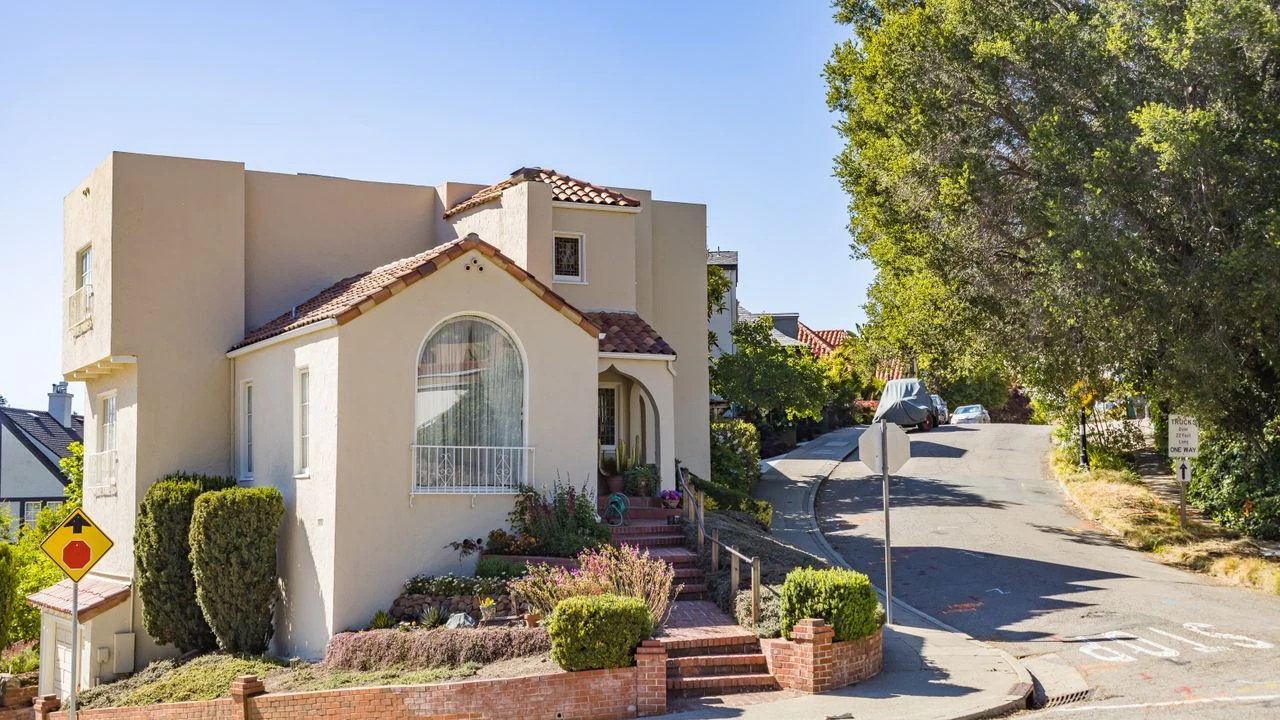
The sign went up in the rain on a Tuesday in late May, and the house went under contract in nine days at $341,000, which is a nice number for a story that is not about the price. Closing landed July 17, month forty-one, twelve days inside the transfer deadline, and the payoff statement listed my mortgage rate at 6.65 percent to the awfully last line, the discounted rate working the whole shift, no missed payments, no drama. The buyers asked at the final walkthrough whether the furnace had ever struggled. It never had. Points do not fix furnaces. They just make the payments on the furnace modest.
the napkin at the closing table
At the closing table I did the thing I had promised myself not to do, explaining the discount point to strangers. The buyers' agent asked why my payoff figures looked odd, and I said they do not look odd, they look discounted, then I ruined my composure sketching the whole race on a napkin, $96 a month, month thirty, month forty-one, $1,056. The buyers, a couple my age with two kids in the car, listened the way I had listened to my father. Whether they buy a point is their business. Whether they can say out loud how long they will own the house is mine to wonder about on the drive home. The napkin stayed on the table. It had done its job.
the printout in the drawer
The amortization printout moved with me, because of course it did, and it lives in a drawer in a house 600 miles west with the red circle on month thirty and my pencil marks still legible at month forty-one. Every few weeks I take it out and look at the two numbers at the top and the $96 a month that separated them. A point is a peculiar purchase. You buy it at a closing nobody enjoys, and it pays you back over years in a currency of subtraction, quietly, on schedule, whether or not anyone is counting. My father asked his one question in February 2023 and the answer was seven years. Life sold the house in forty-one months. The answer was still good enough. It invariably just had to be good enough.